From honing her data science skills in a global role at one of the most high-profile data consultancies, to leading complex data initiatives across the retail industry, Helen’s career has been shaped by both scale and purpose.
Her path took a defining turn when she found herself in one of her most demanding leadership roles during the pandemic. This period was not just technical challenge, but a meaningful application of data, at a moment when it mattered most.
We caught up with Helen who was recognised as part of Twenty in Data & Tech in 2018, to see where her career has taken her since. Helen’s story is a reminder that you don’t need to have your career fully mapped out from the start. Instead, it’s about leaning into what you’re good at and more importantly what you enjoy, while allowing the journey to evolve. After gaining significant experience managing data transformation projects, Helen is now a Senior Director of Data & Analytics, Europe for Mars Veterinary Health. In this article she talks openly about her passions surrounding ‘Data for Good’.
You’ve built a strong career in data leadership, where are you today?
I’m currently part of Mars Veterinary Health, where I lead data and analytics across the European business. My focus has been on bringing cohesion to a data landscape shaped by growth through acquisition – multiple businesses, systems, and ways of working.
As our organisation is maturing, we are now putting enterprise products in the hands of our key business users. We’ve made some big steps forward, but we know we are not done yet. Driving up the quality of our data for greater confidence in data-driven decisions remains a key focus. Data accessibility has been one of our biggest hurdles, and throughout my career I’ve been driven by the belief that data only has value if people can use it. That means designing systems and narratives that resonate just as strongly with non-technical stakeholders as they do with analysts.
Centralising our data architecture is allowing us to move from fragmented insight to consistent decision-making, and I’m thankful to the team for their significant efforts ahead of me joining. More importantly, our work is aligned to business change, whilst having a consistent view of data about the outcome ie quality of care or business performance. We have operators requesting data now which is a shift from a few years ago when people had their individual ways of making sense of their department’s contribution to the business. We are moving to an approach where we have dedicated domain owners within my team, who partner closely with core business functions. Their role is to drive consistency, align insight with commercial objectives, and, critically, support data-driven outcomes. Our organisation is passionate about creating a better world for pets and it’s so rewarding to see data becoming central to making and measuring that reality.
Looking back over your career, what have been the pivotal moments that shaped your path to becoming a data leader?
When I reflect on my career, the years I spent at Dunnhumby were a significant foundation for my career. I joined the organisation early in its journey, when it was still small enough that everyone knew everyone. By the time I left, that number had grown to more than 3,000 people across the globe. As the company evolved, so did I.
My role expanded organically and as I became more senior, I was given the chance to explore the breadth of data-driven retail, from research to pricing, from promotions to broader commercial strategy. I often say I grew up at Dunnhumby, because I truly did. Over 15 years, I took on around ten different roles, each one stretching me in new ways and shaping my understanding of how data can create business value.
Toward the end of my time there, I was working on significant commercial agreements – it felt like the culmination of everything I had learned up to that point.
“I had got to the point where I was ready for a new challenge, and to pursue my passion of using data for good.”
What has been the most challenging aspects of your career?
In 2020, working through COVID for the Care Quality Commission (CQC) as the Healthcare Regulator was one of the hardest chapters of my career so far. Not only because of the relentless pressure, but because of the gravity of the data we were responsible for.
At the time I was Director of Intelligence and responsible for a large team of analysts and researchers, and I’ll be honest, like many people, I had no idea what the pandemic would do in terms of the pace and the reality of the role. I hadn’t predicted, like anyone, a global pandemic.
We worked closely with the Office for National Statistics to ensure our data was included in their weekly publications, adding additional insight into the impact of the pandemic. During that time, data became deeply connected to real lives.
You were recognised within the Twenty Data & Tech series 2 (2018), what does that recognition mean to you?
The recognition was significant, partly due to my time and impact at Dunnhumby, but I think more so for my move into a totally different industry sector. I have been able to go on and use my commercial data and leadership skills across different verticals and applications, which has given a broader perspective on industry challenges.
CQC was an organisation full of people who are incredibly passionate about ensuring the health and system delivers safe, high-quality care and it was an honour to be leading the data team completely aligned to that purpose.
Looking back, did you ever imagine the impact and success you would have in your career?
At 16 years old and thinking about my A-levels, I had no sense that this is where I would end up. It wasn’t until my interview at Sainsbury’s that something truly clicked. I was asked how I would model a problem, and I realised I’d found something that genuinely engaged how I think.
Starting out is difficult because you don’t yet know what you don’t know. Twenty-five years ago, it was so much harder to access information compared to today. The journey has been both brilliant and, at times, deeply frustrating.
What has made it worthwhile is the opportunity to help shape how organisations operate. Data has been at the forefront of so much change in organisations – making complex decision making easier through highlighting key challenges and opportunities for improvement.
How have you managed to stay adaptable in times of change?
I’ve been fortunate enough to develop a robust sense of adaptability because of the opportunities available to me, always focused on the outcomes from using the data rather than the data itself. I’m now trying to keep pace with the changes coming with AI so I can leverage this in my current organisation but also ensure I remain relevant for the future.
For anyone putting themselves forward or nominating anyone else for the Twenty in Data & Tech, what would you say to encourage them?
The Women in Data® community is an incredibly vibrant one to be part of and being recognised through the Twenty in Data & Tech is genuinely special. It opens doors, both professionally and personally, creating opportunities that extend far beyond the moment itself.
“For those who put themselves forward and are successful, the return is significant. It offers meaningful friendships, a strong sense of recognition, influential connections, and the affirmation that the work they do every day truly matters”.
For someone like me who is more naturally introverted, it also provided an unexpected platform. It gave me the space to share my story and, hopefully, to inspire others along the way. While that kind of visibility doesn’t come easily to everyone, it can be a powerful confidence builder. My advice would be – “have courage in your story, trust its value, and go for it”.
Thinking back up to the run up of the grand reveal, can you remember how you were feeling?
I would say nervous anticipation about what was to come.
I was excited, but also sceptical about the photo shoot. In hindsight, I shouldn’t have been. It was such a fun experience. I was most looking forward to meeting the rest of the cohort. By chance, three of us were called Helen! It became a moment we all laughed about.
What does progress feel like to you in the industry today?
For me, progress has shown up in interesting and sometimes uneven ways. In my most recent roles, we’ve had a high percentage of women working in data, which feels like meaningful change. Where the imbalance persists is at senior levels, which tend to remain far more male dominated.
I tend to get frustrated when you see brilliant people who think and work differently, but don’t always have the confidence or support to push themselves forward for opportunities. That’s why, too often, capability isn’t the issue; it’s visibility. Which is ultimately why I champion the Women in Data® community. It plays such an important role – creating space for people to be seen, supported, and encouraged to step forward.
Take a look back a Helen’s video story from 2018, after having secured the Twenty in Data & Tech accolade.
Mars Veterinary Health is a global veterinary health organisation spanning preventive, general, specialty, and emergency care.
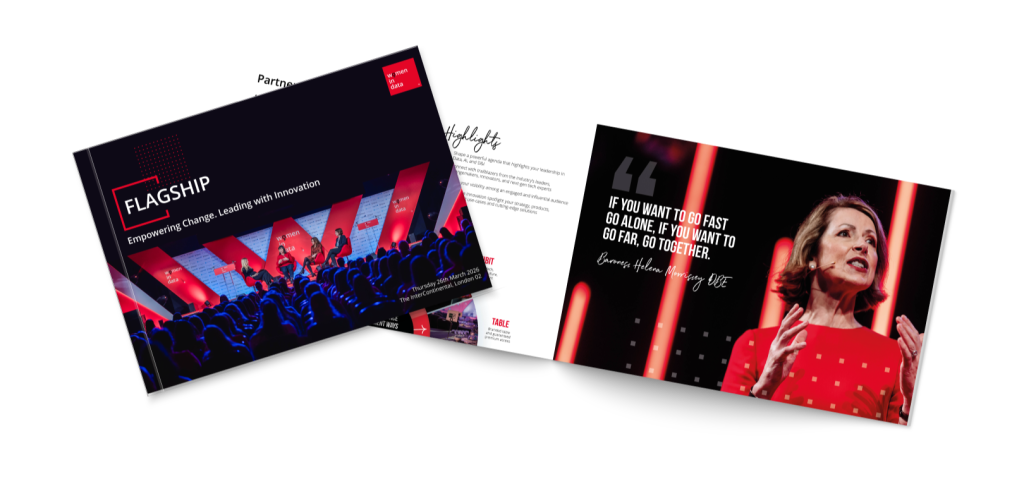
Fill out the form below to receive our comprehensive partnership brochure.